
This course provides an overview of the different types of paralic reservoirs and how their complexity can be unravelled by sedimentological parameters.
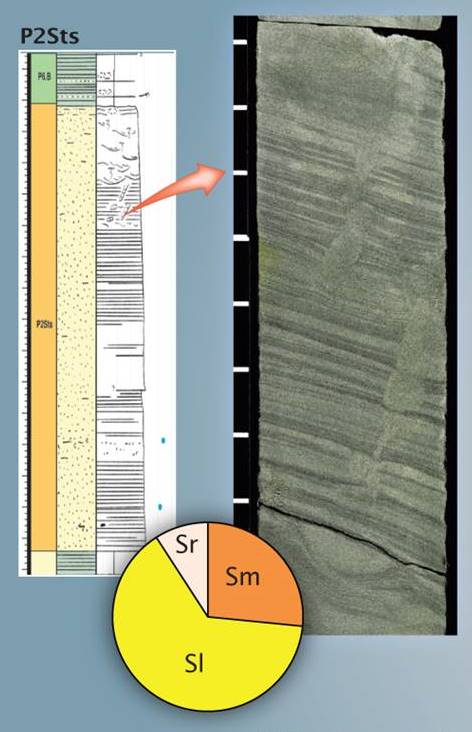
At a small scale, the nature of sedimentary and biogenic structures commonly provides an indication of depositional processes and environments, from which sandbody types and associated shale geometries can be inferred. Their variable architectures and heterogeneities are outlined in this course, together with the impact on permeability anisotropy and resultant fluid flow from the plug to the reservoir scale. At a large scale, paralic successions commonly change character across key sequence stratigraphic surfaces. This course offers insights into stratal surface recognition in order to define a robust layering framework for reservoir modelling. The concepts introduced during the course are underpinned by real subsurface examples from Kuwait represented in the form of a series of case studies. These are accompanied by exercises. The workshop is organised into two sessions:
Part A: Paralic sediments as hydrocarbon reservoirs
• Introduction to paralic sediments – why are they important reservoirs?
• An overview of paralic depositional settings and types of reservoir sandbodies
• Coastal process classification – the role of fluvial, wave and tidal processes on reservoir architecture and heterogeneity
• Deterministic framework – key controls on paralic sedimentation, recognition of key stratal surfaces and stacking patterns, and correlation approach
• Heterogeneities and permeability architecture – the implications
Part B: Case study examples – subsurface of Kuwait
• Burgan Formation
• Wara Formation (south Kuwait)
• Zubair Formation (north Kuwait)
Note: The case study section can be adapted to use case studies of your choosing.
Instructors
Badley Ashton’s clastic reservoir geologists have a keen interest in sedimentology and petrography with established experience in the across the globe. Our geologists currently work on single-well and multiwell reservoir quality evaluation studies. These projects cover a wide range of depositional environments from aeolian to deep water reservoirs. The instructors have a combination of industrial, research and teaching experience.
Who Should Attend?
The course is targeted at petroleum geologists, geoscientists, petrophysicists and engineers involved in exploration and production of paralic reservoirs. Previous knowledge on paralic environments, deltas, estuaries and shoreline-shelf systems is not necessarily required.
If you would like more information on this, or any other courses, please e-mail training@badley-ashton.co.uk or call +44 (0) 1507 588353.